Apple Got Blindsided by AI Demand for Mac Mini and Mac Studio — Here's What Buyers Do Now
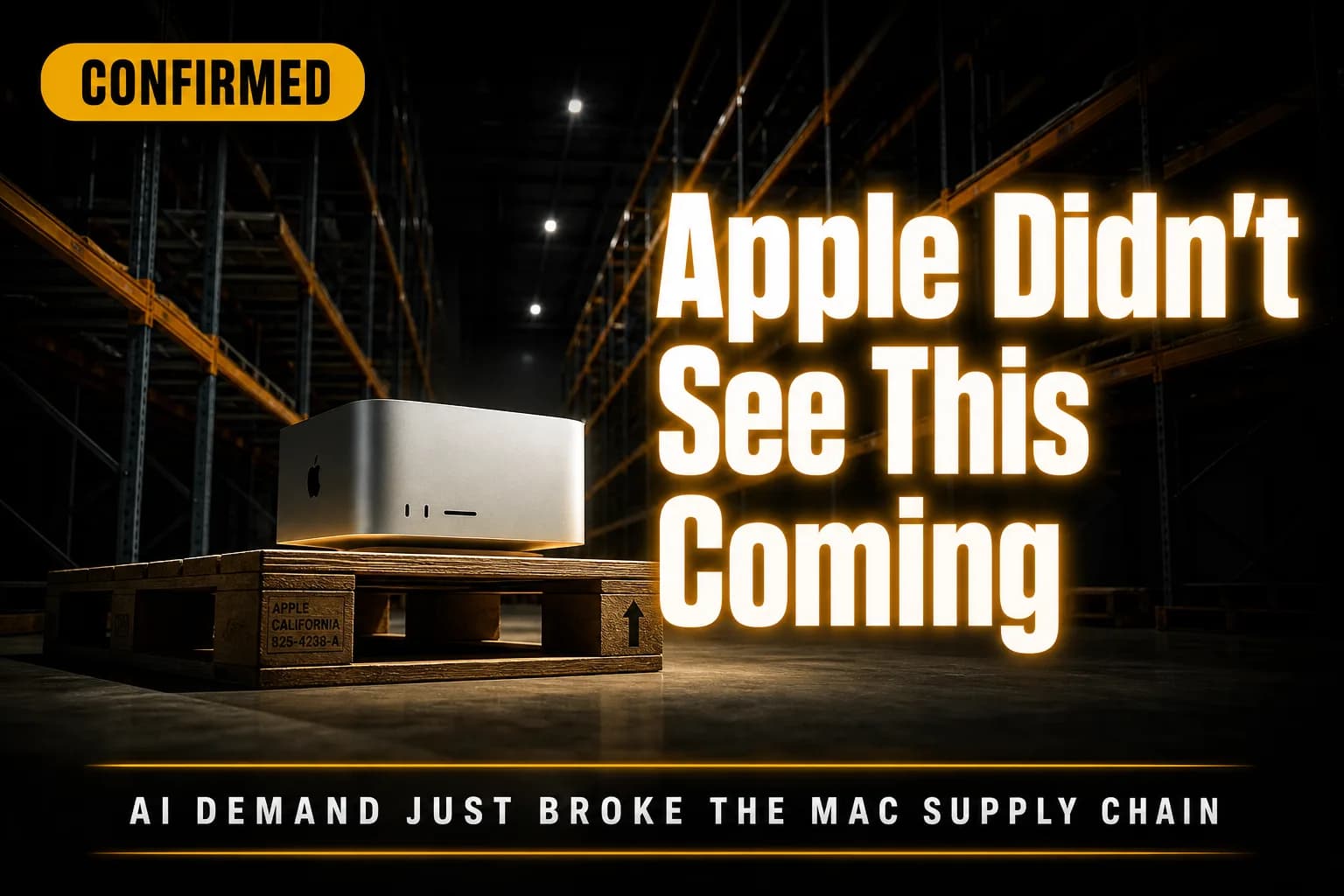
Apple's forecasting models did not account for the Mac Mini and Mac Studio becoming the preferred local AI inference boxes for developers — and now the company is scrambling to catch up, according to reporting from MacRumors on August 30. The scale of the miss matters less than the mechanism: ai demand for these two desktops is coming from a use case Apple did not build the product line to serve.
For a company that famously runs one of the most sophisticated supply chains on the planet, getting blindsided by demand for a desktop tower is notable. Apple has spent two decades optimizing inventory around predictable cycles — iPhone launches, back-to-school MacBook bumps, holiday iPad spikes. The Mac Mini and Mac Studio were never part of that predictable rhythm. They were quiet, professional-tier machines that shipped in modest volume because modest volume was what the market wanted.
That assumption broke sometime in the last two quarters.
What Actually Happened, According to the Reporting
MacRumors' account, sourced from supply chain signals rather than an Apple statement, describes unexpected demand pressure specifically on Mac Mini and Mac Studio configurations — not the MacBook line, not the iMac, not the Mac Pro. That specificity is the story. If this were a general Mac sales boom, you'd expect it distributed across the lineup. Instead it's concentrated on the two machines with the highest unified memory ceilings per dollar and the smallest physical footprint.
That combination — high memory, small chassis, no display tax — is exactly what matters for running large language models locally. A Mac Studio configured with 128GB or more of unified memory can hold quantized versions of open-weight models that would otherwise require a discrete GPU setup costing multiples more. Apple's M-series unified memory architecture, originally pitched around video editing and 3D rendering, turned out to be a near-ideal fit for local inference workloads nobody at Apple's product marketing team was optimizing for when these machines shipped.
The result: components and finished-unit availability tightened in ways that reportedly surprised people inside Apple's own operations chain. That's the headline fact. Everything else is interpretation.
Why Local AI Workloads Made These Machines Valuable
Developers and technical teams have spent 2025 and 2026 getting increasingly nervous about cloud AI inference costs and, separately, about sending proprietary data to third-party API endpoints. Running a capable model locally solves both problems at once, provided you have enough memory bandwidth to make it usable rather than painfully slow.
 Mac Studio desktop workstation setup.
This is where the Mac Studio's architecture becomes relevant in a way Apple's own launch materials never emphasized. The M4 Max and the higher-tier chips Apple ships in Studio configurations offer memory bandwidth figures that rival or beat consumer GPU setups costing significantly more once you account for a comparable amount of usable VRAM. A single Mac Studio with sufficient unified memory can run a 70-billion-parameter model at usable speeds without touching the cloud at all.
The Mac Mini's appeal follows the same logic at a lower price tier. Teams that need multiple inference nodes — for testing, for redundancy, for distributing workloads — can rack multiple Mac Minis for less than a single high-end GPU workstation would cost, and with a fraction of the power draw. That math didn't exist as a mainstream purchasing consideration eighteen months ago. It exists now, and enough buyers have done it simultaneously to strain supply.
Who Gains and Who Loses When AI Demand Outpaces Forecasts
The winners are narrow but real. Early buyers who secured Mac Studio and Mac Mini units before the squeeze got hardware at list price that is now harder to find, giving them a cost advantage over anyone buying today. Apple, at the surface level, gains too — units sold are units sold, and a supply-constrained SKU rarely needs discounting.
The losers are more numerous. Consumers who wanted a Mac Mini for ordinary reasons — a home server, a compact desktop, a media center box — now compete for inventory against buyers with a fundamentally different willingness to pay, because a developer amortizing the cost against cloud API savings has a different budget ceiling than someone replacing an aging desktop. Resellers and secondary markets are the other visible beneficiary, and every markup they capture comes directly out of the pocket of a buyer who needed the machine before the shortage set in.
There's a second, quieter loser: Apple's own planning credibility. A company built around forecasting demand with extreme precision missed a shift that was, in hindsight, visible in developer forums and open-source model release notes for months. That's not a moral failing. It's a data point about how fast AI-driven hardware demand can move relative to traditional consumer electronics cycles.
The Strongest Case Against This Read — and Why It Still Holds
The obvious counterargument: maybe this isn't really an "AI demand" story at all. Maybe it's ordinary demand volatility that MacRumors and outlets covering it are attributing to AI because AI is the trend everyone wants to write about in 2026. Desktop Macs have had supply hiccups before tied to component shortages, shipping delays, or simple underestimation of a well-reviewed product cycle.
That's a fair challenge, and it deserves a direct answer rather than a dismissal. The specificity of which configurations are constrained is the strongest evidence against the "ordinary volatility" explanation. If this were a generic popularity surge, you would not expect the shortage to concentrate on the highest-memory configurations disproportionately — you'd see even pressure across the SKU range, including base models bought by ordinary consumers who have no interest in local inference. Reporting on the configuration-specific nature of the shortage points toward a demand source that specifically values memory capacity over other features, which is the signature of AI workload buyers rather than general consumers.
The counterargument still lands a partial hit, though. Some of this demand is almost certainly ordinary — Apple Silicon Macs have gotten genuinely better, and any product line improvement drives baseline sales growth independent of any AI narrative. The honest position is that AI-driven demand is a real and identifiable contributor layered on top of normal growth, not the sole explanation for every unit that's hard to find.
 Server rack with compact desktop units.
What This Means If You're Deciding Whether to Buy Now
If you need a Mac Studio or Mac Mini specifically for local AI inference work, waiting for a hypothetical restock at a lower price is the weaker bet. Component-driven shortages tied to unexpectedly strong demand for high-memory configurations do not typically resolve with price drops — they resolve with Apple reallocating manufacturing priority, which takes quarters, not weeks.
If your need is more generic — a compact desktop for everyday computing — the calculus is different. You're competing for inventory against buyers with a higher willingness to pay for the same unit, which is a fight you're likely to lose on price if you wait, and a fight you avoid entirely by considering a lower memory configuration that AI-focused buyers have less interest in.
Price hikes are not confirmed in the reporting, and it's worth being precise about that. What is confirmed is a supply-demand mismatch that Apple did not plan for. Historically, Apple's response to unexpected demand has been reallocation and prioritization rather than public price increases, which tend to be reserved for new product cycles rather than existing SKUs under strain.
Steps to Take Right Now
- Check current configuration availability directly through Apple's online store before assuming a shortage applies to every tier — base models are often less affected than high-memory configurations favored by AI workload buyers.
- If your use case is local AI inference, prioritize memory capacity over chip tier when comparing available configurations, since unified memory bandwidth is the actual bottleneck for running larger models.
- Compare total cost against cloud API inference for your expected usage volume before committing to hardware — the math that made Mac Studio attractive to developers only holds if your workload volume justifies the upfront cost.
- Set a price and availability alert through a third-party stock tracker rather than manually refreshing Apple's store, since configuration-specific restocks can happen with little public notice.
Frequently Asked Questions
Why is AI demand specifically driving Mac Mini and Mac Studio shortages instead of MacBooks?
Local AI inference depends on unified memory capacity and bandwidth, which the Mac Studio and higher-end Mac Mini configurations offer at a better price-per-gigabyte than MacBooks in comparable tiers. Developers running large language models locally prioritize raw memory over portability, making these desktop configurations disproportionately attractive compared to Apple's laptop lineup.
Will Apple raise prices on Mac Studio and Mac Mini because of this demand surge?
The MacRumors reporting establishes a supply-demand mismatch but does not confirm any price increase. Apple's historical pattern favors reallocating manufacturing capacity over raising prices on existing SKUs, reserving price changes for new product generations instead.
Is it worth buying a lower-memory Mac Mini configuration to avoid the shortage entirely?
Yes, if your use case doesn't require running large AI models locally. AI-driven demand is concentrated on high-memory configurations, meaning base and mid-tier configurations tend to have better availability and face less competition from developer buyers.
Related Articles
Benedict Evans Says Most Enterprise AI Spend Is Wasted — Here's What Actually Works

How To Disable AI Mode On Google (And Stop Overpaying On Search)
Ed Zitron Called the AI Bubble Two Years Ago. Dan Luu Just Checked His Math.